 DOT
DOT Extension Cost Guide
What our extensions actually cost, what’s included, what pushes the price up, and how paying us works. Based on the jobs we quote and build across Staffordshire, Derby, Nottingham and Leicester. All prices are plus VAT.
How much does an extension cost in the Midlands?
With DOT Services, a single-storey rear extension built under permitted development usually costs £30,000 to £65,000, plus VAT. Side returns, double-storey and wrap-around extensions usually need full planning permission and cost more, from about £40,000 up to £120,000.
Where your job lands in those ranges depends far more on the choices you make than on the size alone: the doors and windows you pick, whether you want it open plan, and how far you want us to take the finish. Everything is agreed with you up front, so the price on your quote is the price you pay for that work.
The short version
Most single-storey rear extensions we build come in between £30,000 and £65,000 plus VAT, and take 8–12 weeks on site. We don’t take a deposit, and the final payment only comes once the job is fully finished. For a quick ballpark on your own house, try our AI Extension Builder.
A real example: a kitchen extension in Nottingham for about £35,000
Our most recent extension was on a semi-detached house in Nottingham, built under permitted development.
- Size
- 3m out from the house, about 6m wide
- Roof
- Tiled pitched roof with two Velux windows
- Used as
- A new kitchen
- Time on site
- About 8 weeks
- Cost
- About £35,000, plus VAT
It came in at the lower end because the customer chose to do the plasterboard and plastering themselves. We agreed that with them before we started, and took the build up to that stage.
How much does each type of extension cost?
Our typical price ranges for 2026, plus VAT. The bars run from £0 to £120,000.
How much does a single-storey rear extension cost?
A single-storey rear extension under permitted development usually costs £30,000 to £65,000 with us, plus VAT. What’s allowed under permitted development depends on the type of house you have, which also affects the size and the price. For a closer figure on your own home, upload a photo to our AI Extension Builder: it gives you a mock-up and a ballpark price in a couple of minutes.
How much does a side return extension cost?
A side return usually costs £40,000 to £60,000, plus VAT.
How much does a double-storey extension cost?
A double-storey extension usually costs £60,000 to £120,000, plus VAT. It can come in towards the lower end if you take on some of the work yourself. For example, we build it to brickwork and you do the plasterboard and plastering.
How much does a wrap-around extension cost?
A wrap-around extension usually costs £70,000 to £100,000, plus VAT.
Do bigger extensions need planning permission?
Usually, yes. Side returns, double-storey and wrap-around extensions normally need full planning permission. That brings its own costs, such as drawings and the planning application, before any building starts. A single-storey rear extension can often be built under permitted development, which just needs Building Control. See our planning permission guide for the details.
What’s included in a DOT extension quote?
Every quote is built around what you want, so almost everything can be added in or taken out.
On a permitted development job
We handle the Building Control submission as part of the price. Most permitted development extensions don’t need full drawings, so we don’t include them unless you ask. If you want an architect to draw it up, we can arrange that for an extra cost, or you can use your own. On our kitchen extension in Sinfin, Derby, the customer paid an architect separately for the drawings, and we built it to that spec.
On a full planning job
We can take care of the planning application through the planning agency we work with, and include it in our quote. The architect works the same way: we can include one, or you can bring your own.
The finish is up to you
As standard, we take the job to a plastered finish with a coat of white paint, ready for you to decorate, with the guttering and everything else needed to finish the outside properly. That’s the same whether it’s permitted development or full planning. If you want to save money, we can stop at the brickwork stage and you do the plasterboard and plastering yourself, like on our Nottingham job.
Will there be any surprise costs?
There shouldn’t be. Everything that goes into the job is agreed with you and written on the quote before we start. If a kitchen isn’t on the quote, a kitchen isn’t going in. Everything beyond the standard finish is your choice:
- Doors: if you want a particular set of bi-folds, we price that exact set, and the quote goes up or down to match.
- Kitchen: we can supply and fit it, buying from somewhere like Howdens, or you can buy your own and we leave it off the quote.
- Flooring and finishing touches: the same applies. We can quote right through to a finished room, or stop wherever you want to take over.
It comes down to how much control you want: hand us the whole job, or do parts yourself to save money.
How much does an extension cost per square metre?
For a quick ballpark, we price a single-storey extension by its floor area and roof type, then add the doors and windows.
These rates are only for a first ballpark. Once we’ve visited, your actual quote is broken down stage by stage, with materials included in each stage. For example:
- Groundworks and footings: around £10,000
- Brickwork: around £10,000
- Structural work: around £4,000
- Plumbing, electrics and plastering: around £2,000 each
Every job is different, so those numbers will change with your house and your choices. Seeing the breakdown means you know exactly what you’re paying for at each stage.
What pushes the price of an extension up?
In our experience, it’s mostly the choices you make, not the ground. The more bespoke you go, the higher the price.
Doors and windows
Bi-folds a supplier keeps in stock cost much less than a made-to-order set. Standard white uPVC windows and doors are cheaper than the grey and black finishes that are popular at the moment.
Guttering
A standard guttering system costs less than a premium metal one.
The kitchen
If you buy the kitchen through us, the price depends on the range you pick.
Going open plan
Knocking through into the house means fitting steel beams, which typically adds £3,000 to £5,000. If the extension is a separate room with a normal doorway, you usually don’t need structural steel at all, so it’s cheaper.
Drains
We check the drains on our first visit. Almost every house has a manhole on its own land, usually in the back garden, and we connect the new extension to it, getting permission from Severn Trent where it’s needed. It only gets expensive if there’s no manhole you can reach on your own property and the connection has to go through the front or a neighbour’s land.
How can you save money on an extension?
Do the finishing yourself
Plenty of our customers have us stop at the brickwork, then do the plasterboard and plastering themselves. That’s how our Nottingham kitchen extension came in at about £35,000.
Skip the architect on a permitted development job
You usually don’t need full drawings for a permitted development extension. On a full planning job you do need them, so there’s no saving there.
Go standard
That means stock doors and windows, standard guttering, and white uPVC rather than coloured frames. Anything we can buy from suppliers in bulk, rather than having it custom-made, keeps the price down.
How do you pay for an extension with DOT?
We don’t take a deposit. You pay weekly or fortnightly as the job goes, and the final payment only comes once it’s fully finished.
It starts with a chat on the phone, then we visit your house to see exactly what you want and put together your quote. Once the price is agreed, we spread the payments across the length of the job.
How long does an extension take?
On site: usually 8–12 weeks
From the day we start work, a typical extension takes us 8 to 12 weeks. We give you a guideline for your own job before we start.
Starting: usually about 6 weeks after you agree the quote
We normally book work in about six weeks ahead, to give ourselves a bit of leeway. If we have the team free, we can sometimes start around three weeks after Building Control have cleared the job.
What does a DOT extension look like during the build?
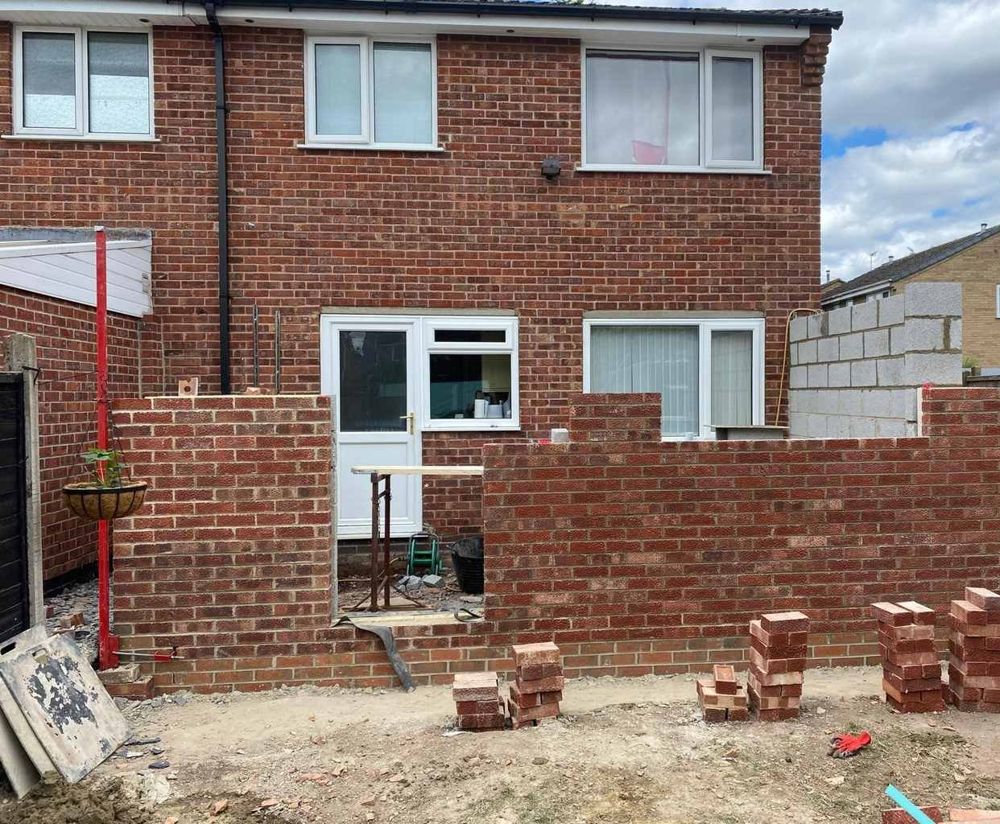
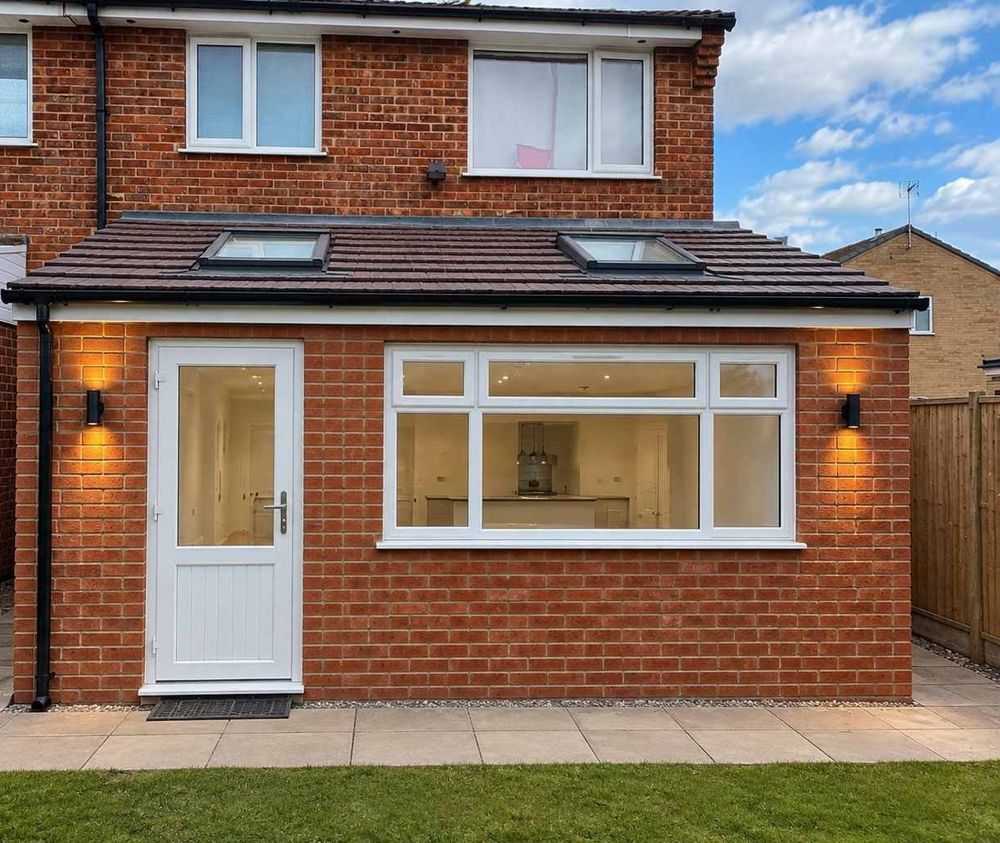
Our kitchen extension in Sinfin, Derby, from the build to the finished job.
Extension cost FAQs
How much does a single-storey extension cost in the Midlands?
With DOT Services, a single-storey rear extension under permitted development usually costs £30,000 to £65,000, plus VAT. Our most recent one, a 3m by 6m kitchen extension in Nottingham, cost about £35,000, with the customer doing their own plasterboard and plastering.
Do your prices include VAT?
No. We’re VAT registered, so VAT at 20% is added on top of all the prices in this guide.
Do I need planning permission for my extension?
Often not. Many single-storey rear extensions can be built under permitted development, which just needs Building Control. Side returns, double-storey and wrap-around extensions usually need full planning permission. We tell you which applies when we visit.
Do you take a deposit?
No. We do the first week or two of work before you pay anything, then you pay weekly or fortnightly. The final payment is only due when the job is fully finished.
Can I do some of the work myself to save money?
Yes. A common one is having us build to brickwork, then doing the plasterboard and plastering yourself. You can also supply your own kitchen, and we leave it off the quote.
How long does an extension take to build?
Usually 8 to 12 weeks on site. We normally start about six weeks after the quote is agreed, and sometimes sooner if we have the team free.
How much does it cost to make an extension open plan?
Opening the extension into the house needs steel beams, which typically adds £3,000 to £5,000. If the extension is a separate room with a normal doorway, you usually don’t need steels.
Related pages
Get a proper price for your extension
Every house is different. Give us a ring, and we’ll come out, see what you want, and give you a clear quote.